

Introduction
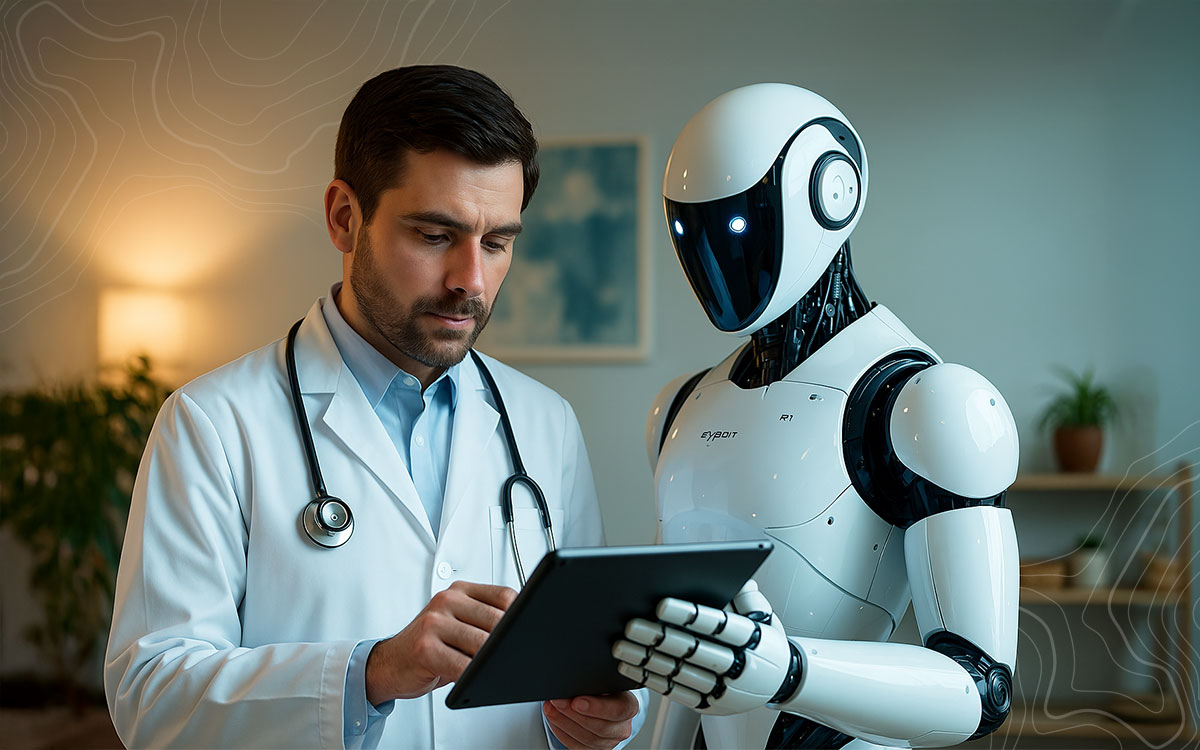
In recent years, the healthcare industry has undergone a technological transformation unlike any other in its history. Among the most groundbreaking advancements is the integration of artificial intelligence (AI) into robotics. This powerful combination is revolutionising patient care, surgical precision, and hospital operations. AI-driven robots are no longer confined to research labs—they are now active participants in operating theatres, rehabilitation centres, and patient wards.


Most urban healthcare professionals are keen to acquire skills in AI. Thus, an AI Course in Bangalore might be specifically tailored for the healthcare segment. .
What sets AI-powered robotics apart is its ability to merge precise, machine-driven execution with an empathetic approach to care. From performing delicate surgeries to assisting elderly patients with daily tasks, these systems represent the next leap forward in delivering efficient and compassionate healthcare.
The Rise of AI-Driven Healthcare Robotics
Robotics in healthcare is not a new concept. For decades, robotic arms have assisted surgeons in performing minimally invasive procedures. However, the integration of AI has taken these capabilities to a whole new level. AI algorithms allow robots to analyse data in real time, adapt to unexpected scenarios, and even learn from past experiences.
This means a surgical robot can now adjust its actions mid-procedure based on subtle changes in a patient’s vitals or anatomy. Similarly, AI-enhanced rehabilitation robots can personalise therapy plans by tracking a patient’s progress and predicting recovery timelines. These advancements are making healthcare delivery not only more accurate but also more personalised.
Core Technologies Behind the Innovation
Several technologies converge to make AI-driven robotics a reality in healthcare:
- Machine Learning (ML): Enables robots to learn from vast datasets, improving their decision-making and adaptability over time.
- Computer Vision: Allows robots to interpret medical images, recognise anatomical structures, and guide surgical tools with microscopic precision.
- Natural Language Processing (NLP): Helps robots understand and respond to spoken language, enabling smoother patient interactions.
- Sensor Integration: Provides tactile feedback for delicate procedures and ensures robots can detect force, pressure, and texture.
These capabilities don’t emerge overnight—they require skilled professionals trained in both AI and robotics. As a result, many aspiring professionals are turning to an Artificial Intelligence Course to gain the expertise needed for careers in this fast-evolving field.
Surgical Precision Beyond Human Limits
One of the most celebrated applications of AI-driven robotics is in surgery. Automated surgical systems have already proven the advantages of robotic assistance. With AI integration, these systems are becoming more intelligent and more autonomous.
AI algorithms can process thousands of historical surgical cases to guide decision-making during live procedures. For example, in orthopaedic surgery, an AI-powered robot can calculate the optimal angle for joint replacement implants based on both preoperative scans and intraoperative feedback. The result is reduced operation times, fewer complications, and faster patient recovery.
Moreover, these systems can maintain their accuracy for long hours without fatigue—something that even the most experienced human surgeons cannot match.
Patient Care with a Human Touch
While precision is crucial, empathy remains at the heart of healthcare. AI-driven robots are increasingly designed to recognise emotional cues and respond appropriately. In elderly care facilities, for instance, companion robots can monitor vital signs, remind patients to take medications, and engage them in conversations to reduce loneliness.
These robots use AI to detect changes in speech patterns or facial expressions, alerting caregivers if a patient seems distressed or unwell. This ability to combine medical monitoring with social interaction is a step toward truly holistic care.
Rehabilitation and Recovery Assistance
Rehabilitation robotics has seen remarkable progress with AI integration. Physical therapy robots can now tailor exercises to individual patients, adjusting resistance levels or movement patterns in real time. They use motion sensors and AI algorithms to track progress, ensuring that therapy sessions are both practical and safe.
In post-stroke rehabilitation, for example, AI-powered exoskeletons help patients regain mobility by guiding their limbs through precise movements. Over time, the AI learns the patient’s capabilities and gradually increases the difficulty to promote recovery.
Hospital Operations and Efficiency
Beyond direct patient care, AI-driven robots are streamlining hospital operations. Autonomous robots can transport medical supplies, sterilise equipment, and deliver medications across extensive facilities, reducing the workload on human staff.
By using AI to optimise delivery routes and schedules, these robots ensure that critical resources reach the right place at the right time. This operational efficiency translates into more time for healthcare professionals to focus on patient care.
Addressing Challenges and Limitations
Despite the promising potential, AI-driven robotics in healthcare faces several challenges:
- Cost: Advanced AI-powered robots require significant investment, which can pose a concern for smaller healthcare facilities.
- Training: Medical staff must be trained to work with these systems, requiring time and resources.
- Regulation: Ensuring safety, data privacy, and compliance with healthcare laws is a complex but essential task.
- Ethics: Questions about the extent to which robots should make autonomous decisions in healthcare remain under debate.
To address these challenges, collaboration between technology developers, healthcare providers, and regulators is essential. Training programmes, such as an AI Course in Bangalore, are helping bridge the skills gap by preparing professionals to implement and maintain these systems responsibly.
Benefits That Cannot Be Overlooked
When implemented effectively, AI-driven robotics offers benefits that make overcoming these challenges worthwhile:
- Increased Accuracy: Reduced errors in diagnosis, surgery, and treatment delivery.
- Scalability: Ability to serve more patients without sacrificing quality of care.
- Consistency: Reliable performance without fatigue or emotional bias.
- Data-Driven Insights: Continuous learning from patient data to improve outcomes over time.
These benefits are driving global adoption and encouraging further innovation in the sector.
The Future of AI-Driven Healthcare Robotics
Looking ahead, the possibilities are vast. We may soon see robots capable of conducting fully autonomous routine surgeries or providing 24/7 at-home care for chronic patients. Advances in telepresence enable specialists to operate or consult remotely using robotic systems anywhere in the world.
In addition, integrating AI-driven robots with wearable health devices could create a seamless care ecosystem—monitoring patients continuously, predicting health issues before they escalate, and initiating preventative interventions.
However, it’s essential to balance innovation with ethical considerations. Transparency in AI decision-making, patient consent, and maintaining the human element in healthcare will be key to building trust in these systems.
Conclusion
AI-driven robotics is transforming healthcare by blending unmatched precision with a growing capacity for empathy. From the operating room to the patient’s bedside, these technologies are improving outcomes, enhancing efficiency, and expanding access to quality care. The combination of robotics and AI is not about replacing healthcare professionals but empowering them with tools that augment their abilities.
As the technology matures, those equipped with skills from an Artificial Intelligence Course will play a pivotal role in shaping its future. By adopting this innovation, the healthcare industry can ensure that precision truly meets empathy—delivering care that is both cutting-edge and deeply human.
For more details visit us:
Name: ExcelR – Data Science, Generative AI, Artificial Intelligence Course in Bangalore
Address: Unit No. T-2 4th Floor, Raja Ikon Sy, No.89/1 Munnekolala, Village, Marathahalli – Sarjapur Outer Ring Rd, above Yes Bank, Marathahalli, Bengaluru, Karnataka 560037
Phone: 087929 28623
Email: enquiry@excelr.com