
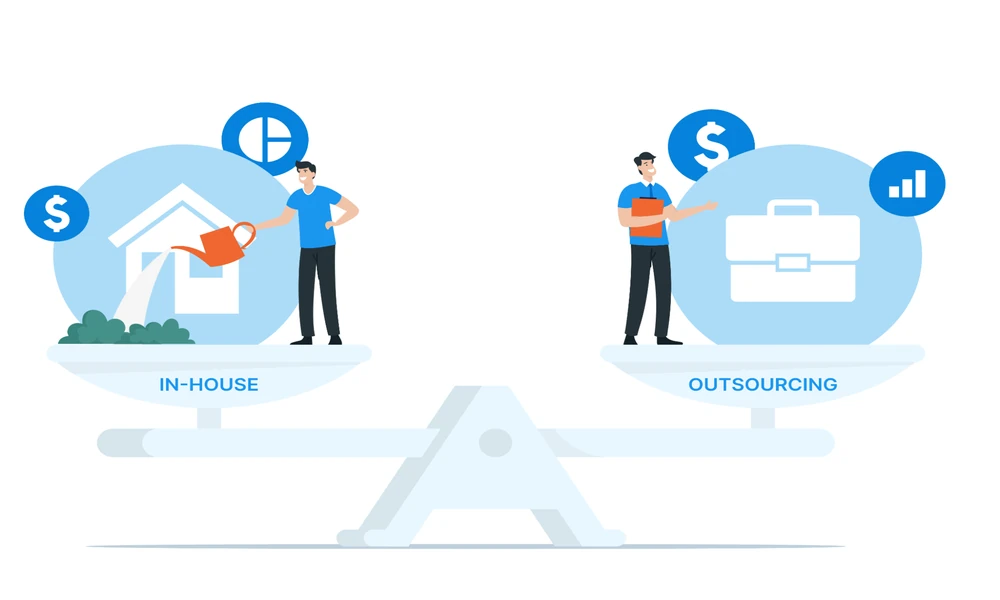
As small businesses expand, managing technology becomes increasingly complicated because employees depend on reliable computers, business applications, communication systems, and secure access to important information. Business owners must eventually decide whether these responsibilities should be handled by internal employees, an external technology provider, or a combination of both. Each approach offers advantages, but the most suitable arrangement depends on factors such as company size, operational requirements, available resources, cybersecurity risks, and future expansion plans. An in-house IT employee may provide direct assistance and detailed knowledge of daily business operations, while an outsourced provider may offer access to a broader range of technical expertise and structured service arrangements. For businesses throughout Westchester County, New York, understanding these differences is essential before committing to a particular support model. Rather than choosing an option solely on the basis of immediate expenses, business leaders should evaluate which arrangement can maintain reliable systems, protect company information, and support long-term organizational development.
Understanding How In-House IT Support Works
In-house IT support involves employing one or more technical professionals who work directly for the organization and manage its technology requirements. Depending on the company’s size and complexity, the internal team may consist of a single support technician, a systems administrator, or several specialists responsible for different areas of technology infrastructure. These employees typically handle tasks such as configuring computers, maintaining network connections, managing software access, troubleshooting technical problems, and coordinating technology improvements. Because they work within the organization, internal IT professionals can become familiar with specific business applications, employee workflows, and the operational priorities of different departments. For example, an engineering company in White Plains may use specialized design software and connected equipment that require regular technical attention. An internal technician with experience maintaining these systems may be able to identify recurring problems quickly and coordinate improvements directly with the employees who use them.


The Advantages of Maintaining an Internal IT Team
One of the primary benefits of in-house IT support is the direct relationship between technical employees and the business they serve. Internal staff can participate in planning meetings, communicate regularly with department managers, and develop detailed knowledge of company procedures and technology requirements. When employees experience difficulties with office equipment or specialized applications, an available internal technician may be able to provide hands-on assistance without arranging a separate external service visit. This familiarity can be particularly valuable for organizations operating proprietary systems, maintaining specialized equipment, or supporting employees whose work depends on unusual technology configurations. Internal teams may also help management coordinate technology purchasing, employee onboarding, software deployment, and infrastructure upgrades according to changing business priorities. However, the availability of direct support depends on adequate staffing, appropriate technical skills, and clearly defined responsibilities within the organization.
The Financial and Operational Challenges of In-House Support
Hiring internal IT personnel involves more than paying an annual salary because businesses must also consider benefits, recruitment expenses, employee training, support tools, equipment, and ongoing professional development. The U.S. Bureau of Labor Statistics publishes occupational wage information for computer support specialists and related technology positions, which businesses can use as a starting point when evaluating staffing costs. However, actual compensation requirements vary according to experience, technical responsibilities, location, and the complexity of the role being filled. A company requiring advanced cybersecurity knowledge, network administration, and cloud infrastructure expertise may need more than a general support technician can reasonably provide. In addition to compensation, businesses must consider how technical responsibilities will be handled when an employee is on vacation, becomes ill, leaves the organization, or faces several urgent problems simultaneously. These limitations can be particularly challenging for smaller companies that have enough technology work to require professional assistance but lack the budget to employ a complete IT department.
Understanding the Outsourced IT Support Model
Outsourced IT support involves contracting with an external service provider to manage specific technology responsibilities under an agreed arrangement. Depending on the provider and service package, these responsibilities may include employee help-desk assistance, workstation management, network monitoring, software maintenance, cloud administration, cybersecurity support, and technology consulting. Rather than employing individual specialists for every technical requirement, a small business may be able to access different areas of expertise through a single external relationship. This arrangement can be particularly useful when an organization has relatively standard technology needs but requires dependable support across several systems and applications. Outsourced services may also provide structured reporting, documented support procedures, and regular technology reviews that would otherwise need to be developed internally. Nevertheless, business owners must carefully examine the agreement because support availability, service limitations, technical expertise, and additional charges can vary considerably between providers.
How Outsourcing Can Support Business Flexibility
One advantage of outsourcing is the potential to adjust technical assistance as business requirements change without necessarily hiring a new employee for every additional responsibility. A professional services company in Scarsdale might initially require basic workstation support, network maintenance, and assistance managing business email accounts. As the organization expands, it may need more sophisticated cybersecurity controls, cloud administration, remote-access management, and support for employees working across multiple locations. An external technology provider may be able to supply these additional services through an expanded support arrangement, depending on its capabilities and contractual terms. This flexibility can help businesses accommodate changing operational demands while maintaining a consistent relationship with their technology provider. However, organizations should verify how service changes are priced, whether specialized expertise is available, and how quickly the provider can accommodate additional employees or infrastructure requirements.
Evaluating an Outsourced IT Support Provider
Choosing the right external technology partner requires more than comparing advertised service packages or selecting the company offering the lowest monthly fee. A business considering a small business IT support company should evaluate the provider’s experience, technical capabilities, communication procedures, service availability, and understanding of the organization’s industry-specific requirements. CMIT Solutions’ Westchester location lists managed IT services, cybersecurity, cloud solutions, IT support, data backup, and network management among its available service offerings. These categories illustrate the range of technology responsibilities that an outsourced provider may help coordinate for growing businesses. Before making a decision, organizations should confirm which services are included, how urgent problems are handled, whether onsite assistance is available, and what additional charges may apply to specialized projects. A clearly documented agreement helps both parties understand their responsibilities and provides a more reliable basis for evaluating service performance.
Comparing the True Costs of Both IT Support Models
A meaningful financial comparison between internal and outsourced IT support should consider the total cost of delivering the required services rather than focusing exclusively on salary or monthly contract fees. Internal support expenses may include employee compensation, benefits, recruiting, training, technical tools, specialist contractors, and resources needed to provide coverage during staff absences. Outsourced support arrangements may involve recurring service charges, onboarding fees, hardware purchases, software subscriptions, project expenses, and additional support outside standard contract terms. The organization should also evaluate the business consequences of technical problems, including employee downtime, delayed projects, and interruptions to customer service. For example, hiring a single internal technician may initially appear less expensive than a comprehensive outsourced service package, but additional specialist assistance could change the overall cost comparison. Similarly, an outsourced agreement that excludes important services may become more expensive than expected if the business regularly requires work outside the included coverage.
Comparing Response Times and Technical Availability
Support availability is an important operational consideration because different businesses have different expectations concerning technical response times and assistance outside normal working hours. An internal employee may be able to provide immediate hands-on support while present in the office, which can be valuable for organizations where employees regularly encounter physical equipment or specialized application problems. However, a small internal team may have difficulty maintaining consistent coverage during vacations, illness, emergencies, or periods of heavy workload. Outsourced providers may offer structured help-desk services and escalation procedures, although the actual availability depends on the agreed contract and service package. Businesses should carefully review service-level agreements to understand how incidents are prioritized, what initial response targets apply, and whether urgent issues receive different treatment from routine support requests. It is also important to recognize that a promised response time does not necessarily guarantee that every problem will be completely resolved within the same period.
Evaluating Cybersecurity Expertise and Responsibilities
Cybersecurity introduces an additional consideration because maintaining appropriate protection often requires knowledge that extends beyond ordinary computer troubleshooting. Organizations may need assistance with software vulnerabilities, multifactor authentication, endpoint protection, access management, secure backups, incident response, and compliance-related requirements. Internal employees can develop valuable knowledge of company systems, but one technician may not possess specialized expertise in every cybersecurity discipline. Outsourced providers may offer access to additional professionals and security-related services, although businesses should verify these capabilities rather than assuming they are included automatically. The Cybersecurity and Infrastructure Security Agency encourages small and medium-sized businesses to assess the security practices of their vendors and suppliers, which is particularly relevant when external technicians receive access to sensitive systems. Regardless of the support model, management must establish clear responsibilities for maintaining security controls, reviewing risks, and responding to potential incidents.
When a Hybrid IT Support Model Makes Sense
For some organizations, combining internal technical employees with an outsourced technology provider offers a practical alternative to choosing one model exclusively. Under a hybrid arrangement, internal personnel may handle everyday employee assistance, specialized business applications, and department-specific requirements while an external provider manages selected infrastructure, cybersecurity, cloud systems, or advanced technical projects. For example, a growing company in Yonkers may employ an internal technician who understands its proprietary applications and provides regular onsite support. The company could also contract with an external provider for network monitoring, security administration, backup management, and assistance during major infrastructure upgrades. This arrangement allows the organization to retain direct internal knowledge while accessing additional technical resources when necessary. However, hybrid models require clear communication and carefully documented responsibilities so that employees know which team handles particular problems and who has authority to approve important technical changes.
Choosing a Support Model Based on Business Requirements
The most appropriate IT support arrangement depends largely on the complexity of the organization’s technology environment and the resources available to manage it. A small company with relatively standard business applications, limited internal technical expertise, and a modest number of employees may find that outsourced support provides a suitable balance of professional assistance and operational flexibility. A larger organization with proprietary systems, extensive onsite equipment, or frequent department-specific requirements may benefit from maintaining dedicated internal professionals. Businesses that already have internal technical personnel but require additional infrastructure or cybersecurity expertise may be better served by a hybrid arrangement. Decision-makers should also consider expected staffing changes, the importance of uninterrupted application access, support requirements outside normal office hours, and the organization’s ability to recruit qualified technical employees. Evaluating these practical factors helps companies choose a service model based on actual operational needs instead of following a general assumption that one arrangement is always superior.
Planning a Smooth Transition Between Support Models
Changing IT support arrangements requires careful coordination because poorly managed transitions can create security risks, interrupt employee access, or leave important systems without clear support responsibilities. Before introducing a new provider or hiring internal personnel, businesses should document existing infrastructure, administrative accounts, software subscriptions, vendor relationships, backup procedures, and network configurations. Management should also identify the individuals responsible for transferring system access, explaining current technical issues, and confirming that essential applications continue to function during the transition. When replacing an external provider, organizations need secure procedures for transferring credentials, reviewing permissions, and removing unnecessary access after responsibilities have been handed over. Businesses moving toward a hybrid arrangement should establish clear reporting procedures so internal staff and outside specialists understand how to coordinate support requests and technology changes. An organized transition helps preserve institutional knowledge and reduces the likelihood that important responsibilities will be overlooked during the change.
Measuring Whether the Chosen Model Is Working
Selecting an IT support arrangement should not be viewed as a permanent decision that never requires further evaluation. Business needs change as organizations add employees, introduce software, acquire customers, or expand to additional locations, and the support structure should be reviewed accordingly. Management can monitor indicators such as recurring technical problems, support response times, system availability, employee satisfaction, technology spending, and the completion of planned infrastructure improvements. Businesses should also determine whether specialized expertise is readily available when unusual problems arise and whether cybersecurity responsibilities remain clearly assigned. Regular performance reviews can reveal when an internal team needs additional support, when an external contract should be expanded, or when a hybrid arrangement might provide better coverage. This continuing evaluation allows organizations to adapt their technology support model without waiting until recurring problems become serious operational obstacles.
Making the Right Long-Term Decision for Your Business
There is no single IT support model that works equally well for every small business because organizations differ in size, operational complexity, technical requirements, and available resources. Internal employees can provide direct assistance and valuable familiarity with business systems, while outsourced providers may offer access to broader expertise and structured support arrangements. Hybrid models combine elements of both approaches and may be particularly useful for organizations whose technical requirements are becoming more sophisticated. For businesses throughout Westchester County, the most important objective is to select an arrangement that maintains reliable operations, protects important information, and allows employees to work efficiently. A carefully evaluated support structure should also provide enough flexibility to accommodate future changes without creating unnecessary complexity or unpredictable expenses. By focusing on business requirements, service quality, clearly defined responsibilities, and long-term operational value, small-business leaders can make technology support decisions that contribute to sustainable growth and greater organizational stability.