

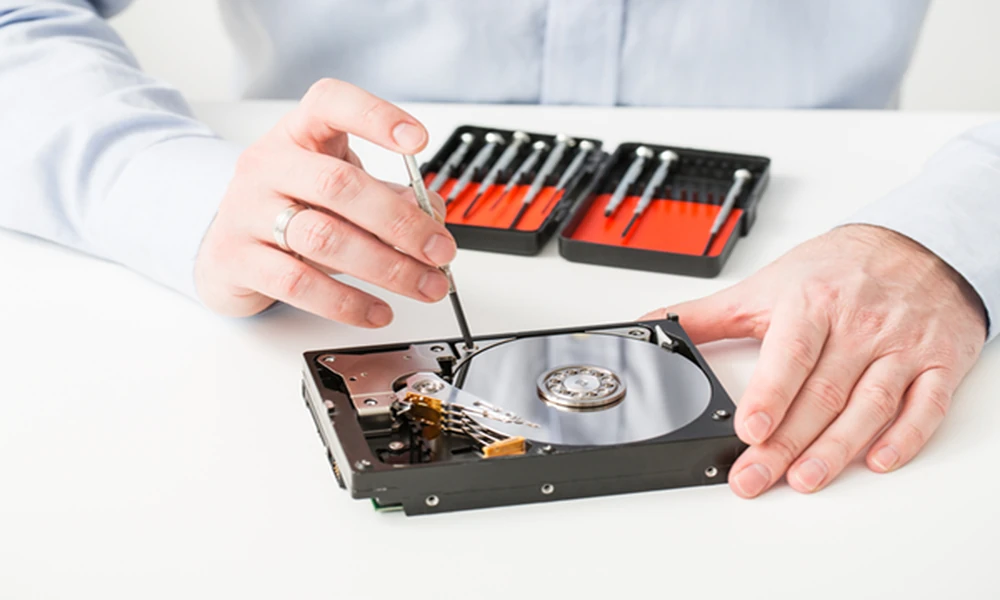
Data is the biggest asset for every business that powers everything from creative projects to transaction details. Although technology has undergone advancements, data loss remains a challenge. Accidental deletions, hardware issues, and malware problems continue to threaten digital assets. However, AI has started redefining how file recovery applications analyze or restore lost information. It marks the trend of intelligent restoration for your lost data.
Modern data recovery software and intelligent restoration
Early data recovery applications used to depend on fixed algorithms. Although they recover recently deleted files, they encounter limitations.
The advanced hard drive recovery applications rely on AI-powered technologies that recognize recovery patterns and analyze storage behavior. They have adapted scanning methods depending on the storage device’s condition.
Intelligent data restoration methods involve using ML and AI to recover your files. AI-driven applications evaluate different variables at a time. For instance, they will scan your file system structure, fragmentation patterns, and file relationships.
With proper interpretation of these factors, intelligent restoration identifies the best recovery strategy.
Machine Learning technology for better file recognition
Pattern recognition is the major advantage of using AI-powered recovery tools. ML models are capable of detecting document structures, archive structures, and video encoding patterns.
Even if file headers are missing or damaged, smart algorithms still reconstruct recoverable files.
Smarter deep scanning
Deep scans often take time while recovering your data. Thus, AI has been introduced to address this issue. The latest technology does not just scan every sector; rather, it detects damaged parts and fragmented clusters. So, you will get a faster recovery solution without affecting accuracy.
PandaOffice Drecov is a reliable data recovery software that conducts a deep scan and restores different types of files.
Predictive recovery
Based on previous recovery solutions, AI models estimate device stability, file integrity, and the chance of recovery. This predictive capability helps you make your recovery attempt successful.
Conclusion
The future data recovery software goes beyond simple file restoration. Smart applications driven by AI technology have reshaped how lost data is reconstructed or identified. By combining automation, ML, and other techniques, the data recovery solution provides the best outcome.