

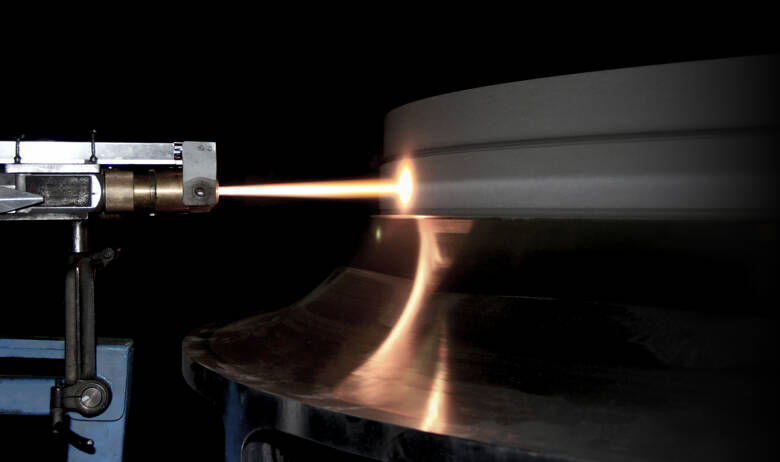
Modern industries rely heavily on rotating parts, cutting tools, and high-performance equipment. But with tough environments come wear, corrosion, and erosion. That’s where high-velocity coating technologies step in. Among them, HVOF coating and HVAF have become the gold standard in extending component life.
These are not your average spray coatings. They use combustion-based systems to launch coating particles at extreme speeds bonding them tightly to the surface and forming an ultra-dense, high-strength layer. Let’s explore how HVOF coatings & services differ from HVAF spray, and how each plays a role in industrial protection.


The Basics of HVOF Coating
HVOF coating stands for High-Velocity Oxy Fuel. The process involves burning fuel (like kerosene or propane) with oxygen to generate a powerful stream of hot gas. Into this stream, fine powder often tungsten carbide or chromium carbide is injected.
The particles accelerate to supersonic speeds and hit the surface with immense force. This results in a coating with strong adhesion, low porosity, and exceptional hardness. The HVOF coating process is popular in aerospace, oil & gas, and mining where components face high wear and demand superior durability.
Companies offering HVOF coating services often tailor the spray parameters depending on material, thickness, and end-use conditions.
What Makes HVAF Coating Different
HVAF, or High-Velocity Air Fuel, works similarly to HVOF — but instead of oxygen, it uses air. This subtle shift changes everything.
In HVAF coating, the combustion temperature is lower. That reduces the risk of oxidizing the spray material. The particles maintain better integrity and still travel at very high speeds. This means you get a denser, harder, and smoother coating — with even lower porosity.
The lower heat also allows more coating passes without overheating the base part. As a result, HVAF spray is gaining traction in industries needing ultra-hard finishes with minimal thermal distortion.
Comparing the HVOF and HVAF Coating Process
| Feature | HVOF coating | HVAF coating |
| Fuel mix | Oxygen + fuel | Air + fuel |
| Combustion temperature | Higher | Lower |
| Particle oxidation risk | Medium | Very low |
| Bond strength | High | Often higher |
| Surface finish | Good | Smoother |
| Wear and corrosion resistance | Excellent | Often superior |
| Coating material retention | May slightly oxidize | Material integrity preserved |
Where These Coatings Shine
Both HVOF coatings and HVAF coatings are used across multiple industries. But each shines in slightly different situations.
Go with HVOF when:
- You need proven performance across large volumes
- The base material can handle moderate thermal stress
- You want fast coating cycles with good adhesion
Opt for HVAF when:
- You need ultra-dense layers with minimal heat impact
- You’re coating tools or components with tight tolerances
- The environment involves extreme abrasion or erosion
Some HVOF coating companies now offer hybrid systems — giving clients the flexibility to choose based on cost, material, or expected performance.
The Rise of High Velocity Oxy Fuel Coating Tech
Both processes fall under the broader umbrella of high velocity oxy fuel coating. The industry is steadily moving toward smarter coatings — ones that can be applied faster, cleaner, and with higher precision.
What was once used only for aerospace and turbines is now being adopted for hydraulic rods, pump sleeves, molds, and rollers in paper and textile industries. That’s because HVOF coating and HVAF help reduce downtime, increase component life, and prevent unexpected failures — all while reducing reliance on lubricants or chemical treatments.
“The battle between HVOF coating and HVAF is less about which is better and more about which is better suited for your application. Each has strengths depending on coating goals, material properties, and environmental exposure.
If you’re exploring reliable HVOF coatings & services, or evaluating HVAF spray options for long-term performance, check the advanced solutions available at Endurance Wear Solutions, built to deliver precision, durability, and protection where it matters most.it matters most.”